


America at 250: Building on the Promise of 1776
The Declaration of Independence began the story. Every generation since has helped write the next chapter.
Published: Jun 28, 2026
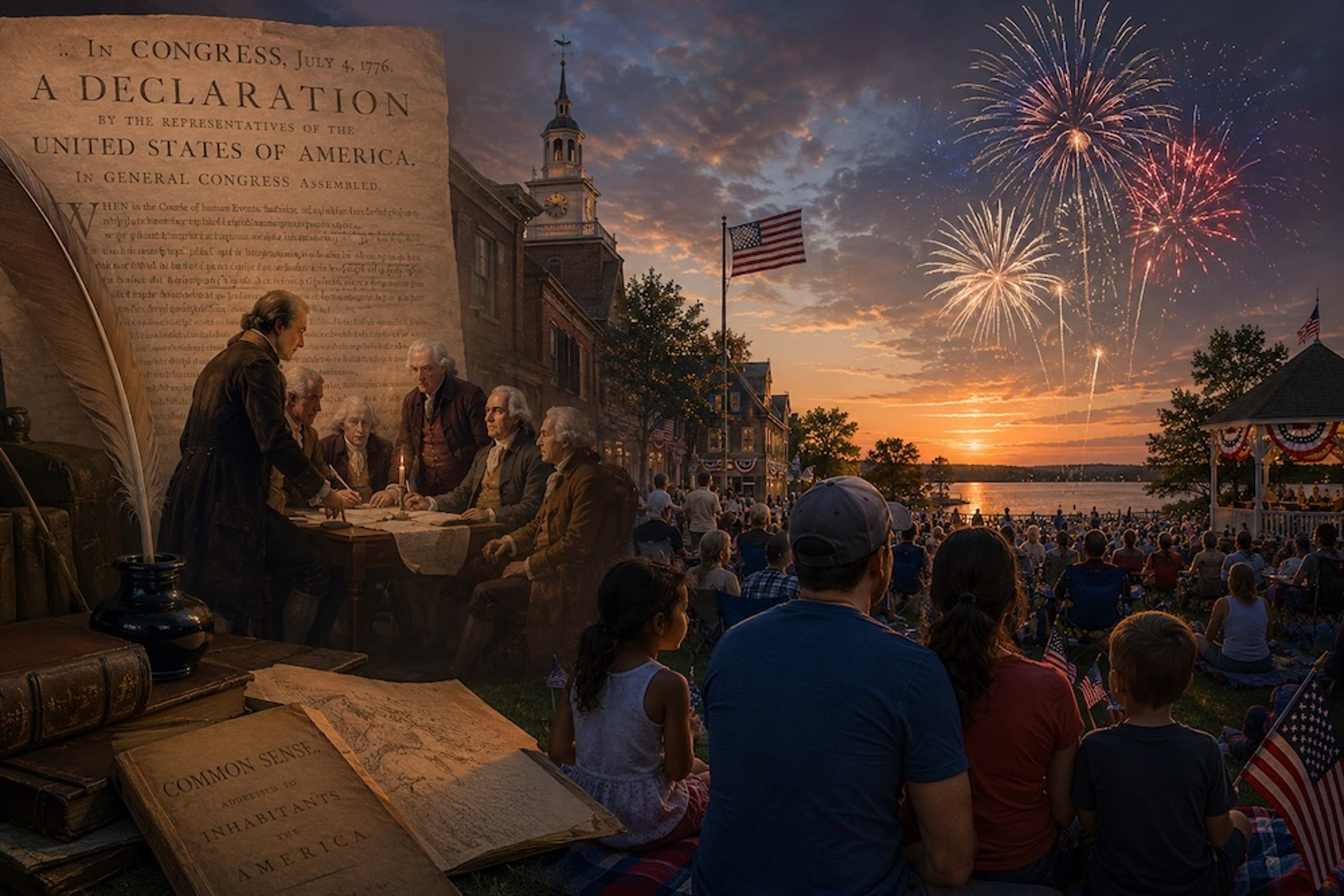
There’s a rhythm to the Fourth of July. It begins in the afternoon with neighbors catching up on porches and the scent of cookouts drifting over fences before transforming into packed parks as everyone looks to the same evening sky.
For all the attention given to the fireworks, I’ve always thought the holiday’s greatest strength is its ability to bring people together. The Fourth creates space for the conversations and rituals that turn a collection of people into a community.
The Fourth is a day when citizenship feels tangible through the people around us and the stories we share. Those relationships and traditions ultimately connect us to something larger than ourselves, anchoring us in a community that endures even when times are tough.
This year carries special significance as we mark the 250th anniversary of the Declaration of Independence. Milestones like this invite us to consider not only how the country began but how its story has been carried forward from one generation to the next.
The story of an unfinished project
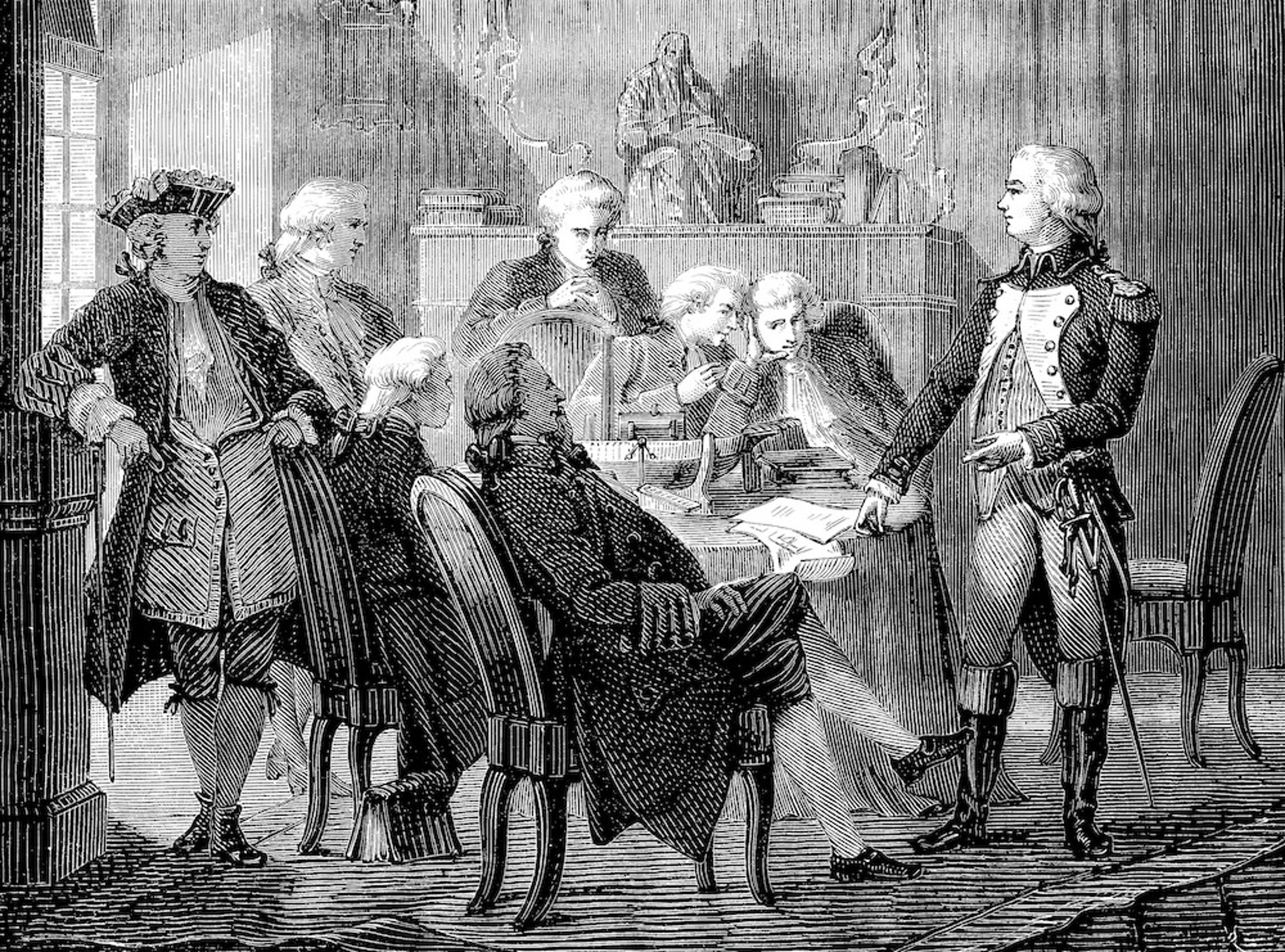
One of my favorite stories about 1776 involves the founders themselves. They came from different colonies and faiths. They were builders, farmers, lawyers, writers, and even shopkeepers.
Their debates were often messy and slow. Ideas traveled by horse and conversations stretched across months. The process required patience and a willingness to keep working through disagreements.
The Declaration of Independence, which emerged from that effort, established a set of ideals centered on liberty and equality. Those principles gave the new nation direction and purpose, while leaving future generations with the responsibility of bringing them to life.
But the story did not end in 1776. Each generation inherited the work, shaped it in its own way, and passed it to their children. Two hundred fifty years later, the project is still unfolding, and the current chapter belongs to us and our disagreements.
Now it's our turn
Over the last 250 years, generation after generation has added to the foundation laid in 1776. People have founded businesses, schools, places of worship, and other civic organizations. They also have passed along traditions that are core to the country we know today.
That process continues in our own time. Like the founders, none of us can see how the story will unfold for our children and grandchildren. We can only make our own contributions and trust that those who follow will build on them in ways we cannot yet imagine.
The Fourth of July offers a reminder that the work of community often begins with simple acts. A local parade, a neighborhood block party, or a conversation with someone you’ve never met may seem small in the moment. Yet these traditions help create the sense of belonging that connects one generation to the next.
By keeping those rituals alive, we strengthen the communities that future generations will inherit.

Through fresh eyes
America’s 250th anniversary comes at a moment when many people are feeling discouraged about the country. The political vitriol is hard to miss, and so is the sense that we are arguing more than we are listening.
Perspective can be hard to find when you’re living through a moment. Sometimes it comes through the eyes of people seeing a place for the first time.
This summer, as visitors from around the world arrive for the World Cup, many are experiencing the United States firsthand. They are encountering an America they didn't expect.
They’re discovering local traditions, neighborhood celebrations, and communities eager to welcome visitors from thousands of miles away. They’re meeting strangers who offer directions, recommendations, and helping hands. More than a few have also discovered ranch dressing and become enthusiastic fans.
What these visitors are seeing has been passed from one generation to the next for centuries. For generations, communities have welcomed newcomers and created places where people feel they belong.
Like the Fourth of July cookout or the Main Street parade, these traditions endure because people continue to pass them along. They become part of the inheritance each generation leaves to the next and part of the story visitors carry home with them.
Preparing for the Tricentennial
In 50 years, Americans will gather to celebrate the nation’s 300th birthday. I find myself wondering what they will inherit. Will they still gather with neighbors on summer evenings? Will they still pass along the traditions that connect one generation to the next? Will they still find reasons to come together in a country that has always been a work in progress?
The answer will be shaped, in part, by the choices we make today. Perhaps that’s what the Fourth of July asks of us each year: to look back with gratitude, look around with fresh eyes, and invest in the relationships and traditions that help communities thrive.
All the best,
Jim
Explore Popular Celebrations Pulse Topics




AUTHOR

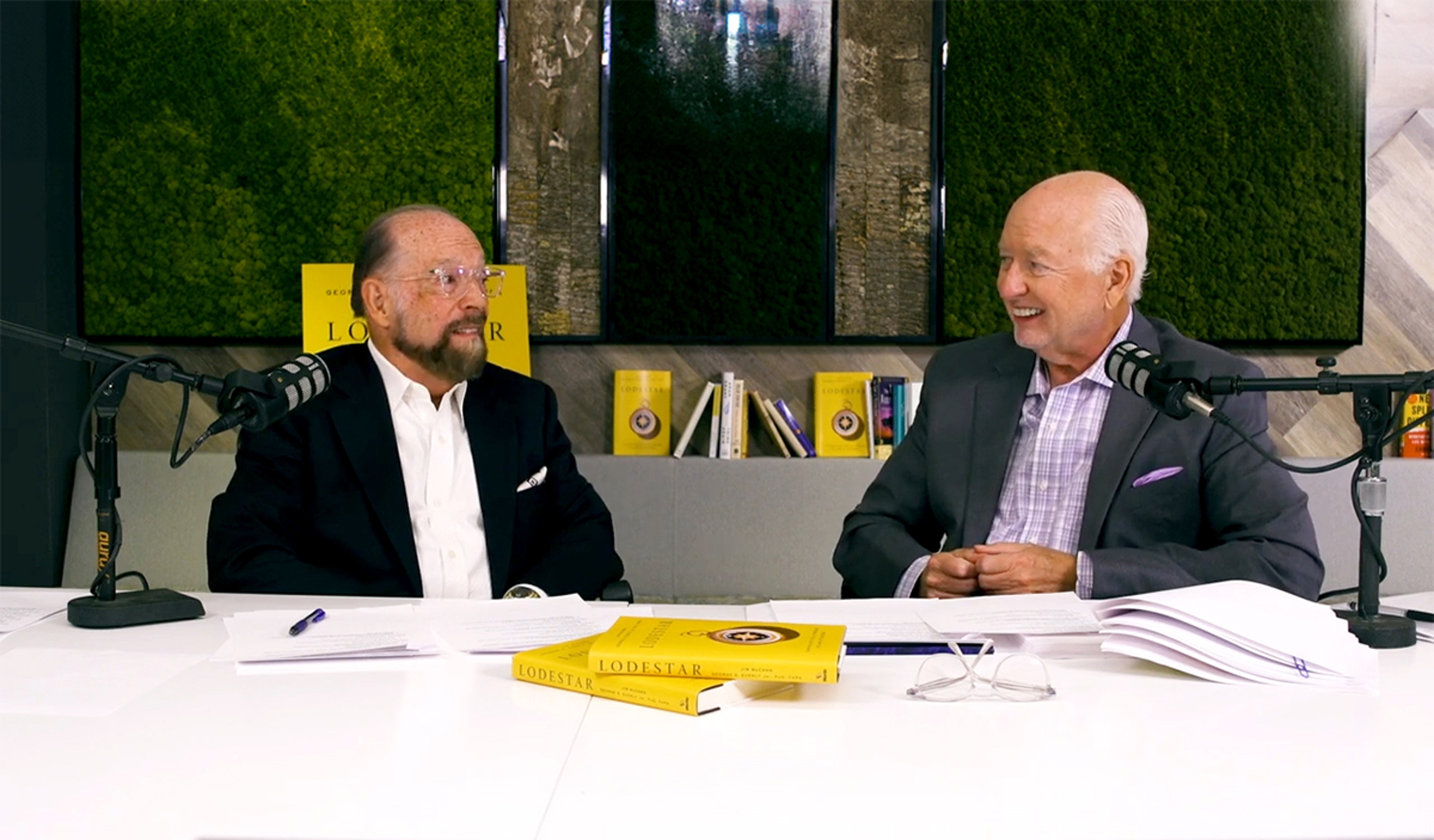
Jim McCann is the founder and chairman of 1-800-FLOWERS.COM, Inc. as well as a business leader, author, and philanthropist with a passion for helping people deliver smiles. Devoted to helping others, he also founded Smile Farms, a 501(c)3 organization that provides meaningful jobs in agricultural settings to young adults and adults with developmental disabilities.